The central nervous system for autonomous material flow. GridLogix Core seamlessly connects your Carrier robots with your existing WMS/ERP, orchestrating massive swarms to optimize heavy logistics across the most complex industrial campuses.
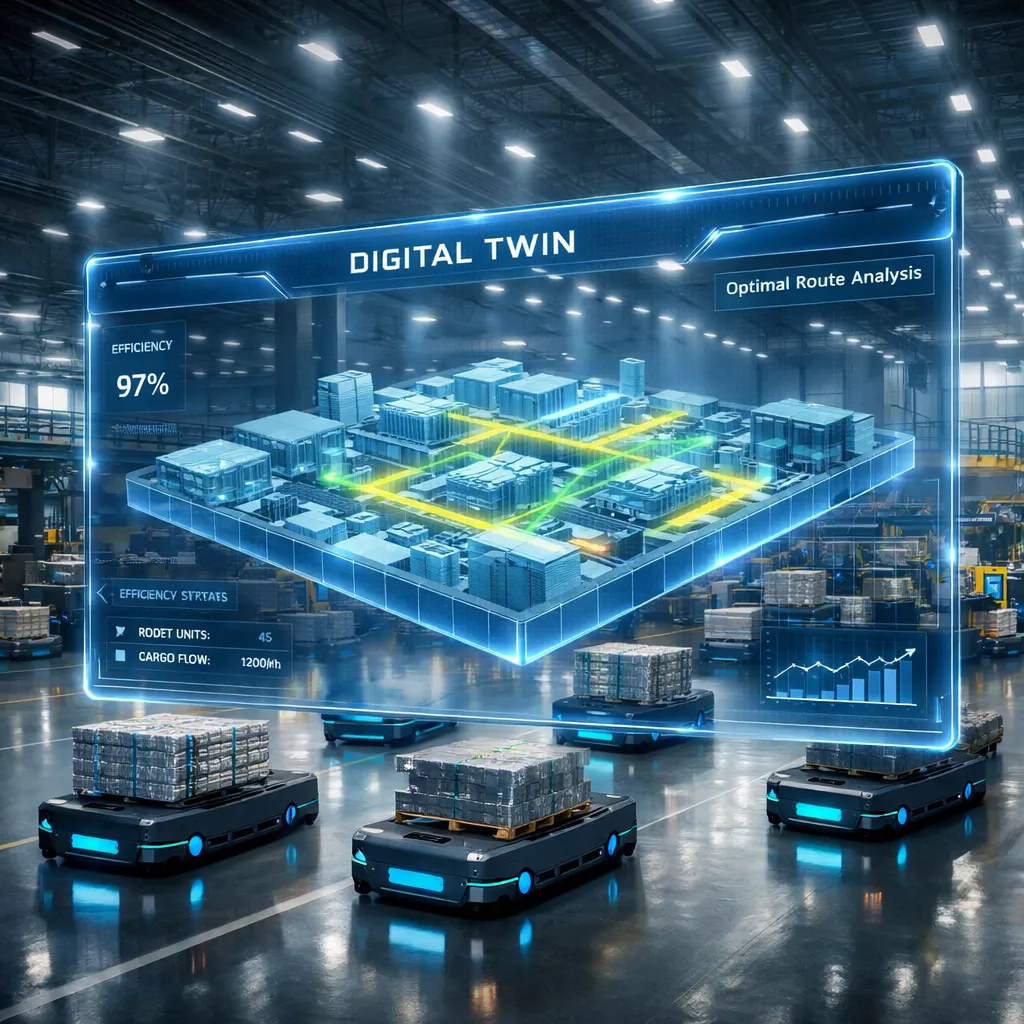
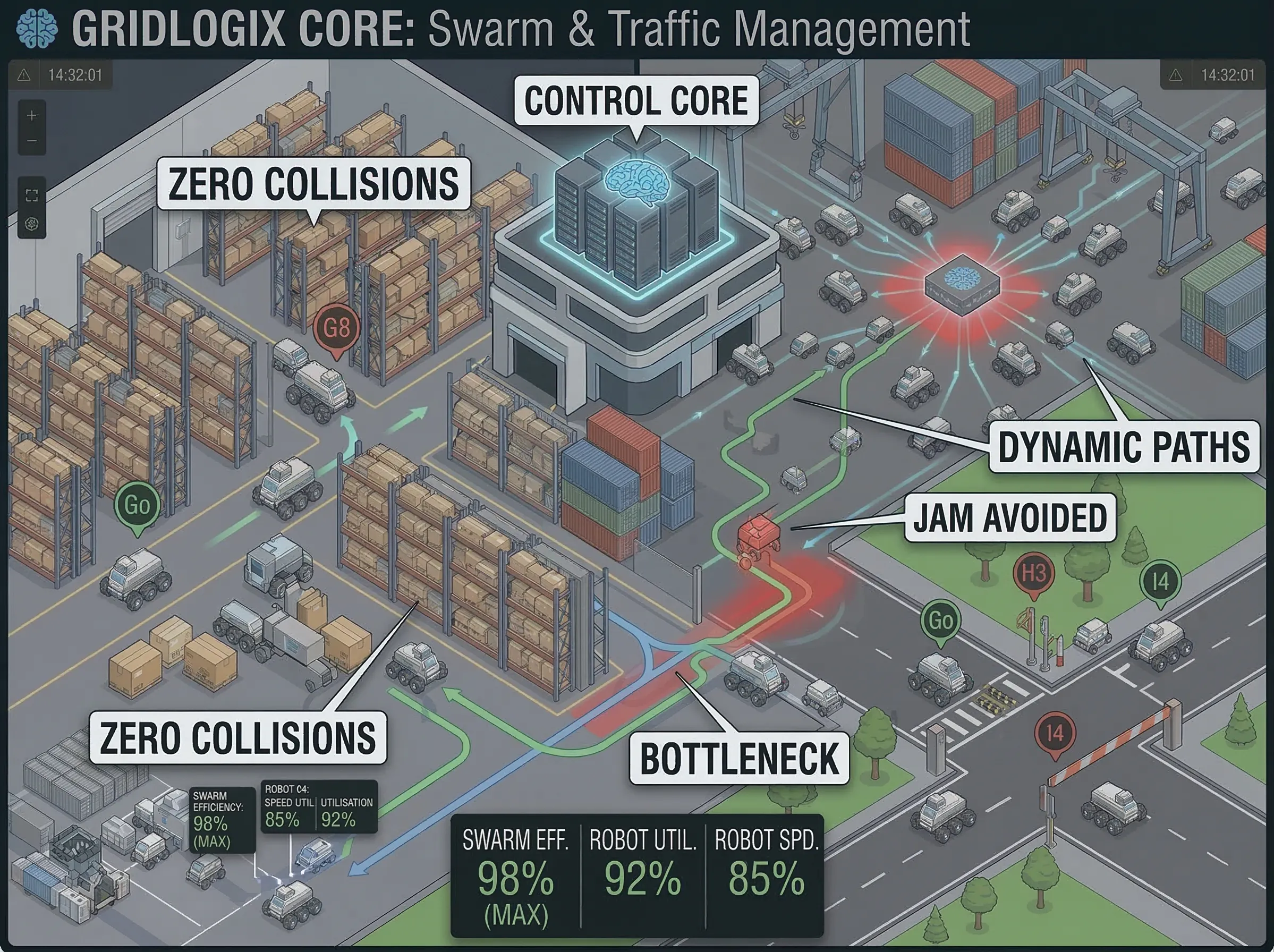
Operating a single robot is easy. Coordinating fifty robots across a busy manufacturing yard is a mathematical nightmare. GridLogix Core acts as an air traffic controller, preventing deadlocks and optimizing flow.
Calculates the optimal route for every robot simultaneously, dynamically adjusting paths to prevent traffic jams before they occur.
Automatically manages right-of-way at tight warehouse intersections and outdoor bottlenecks, ensuring zero collisions.
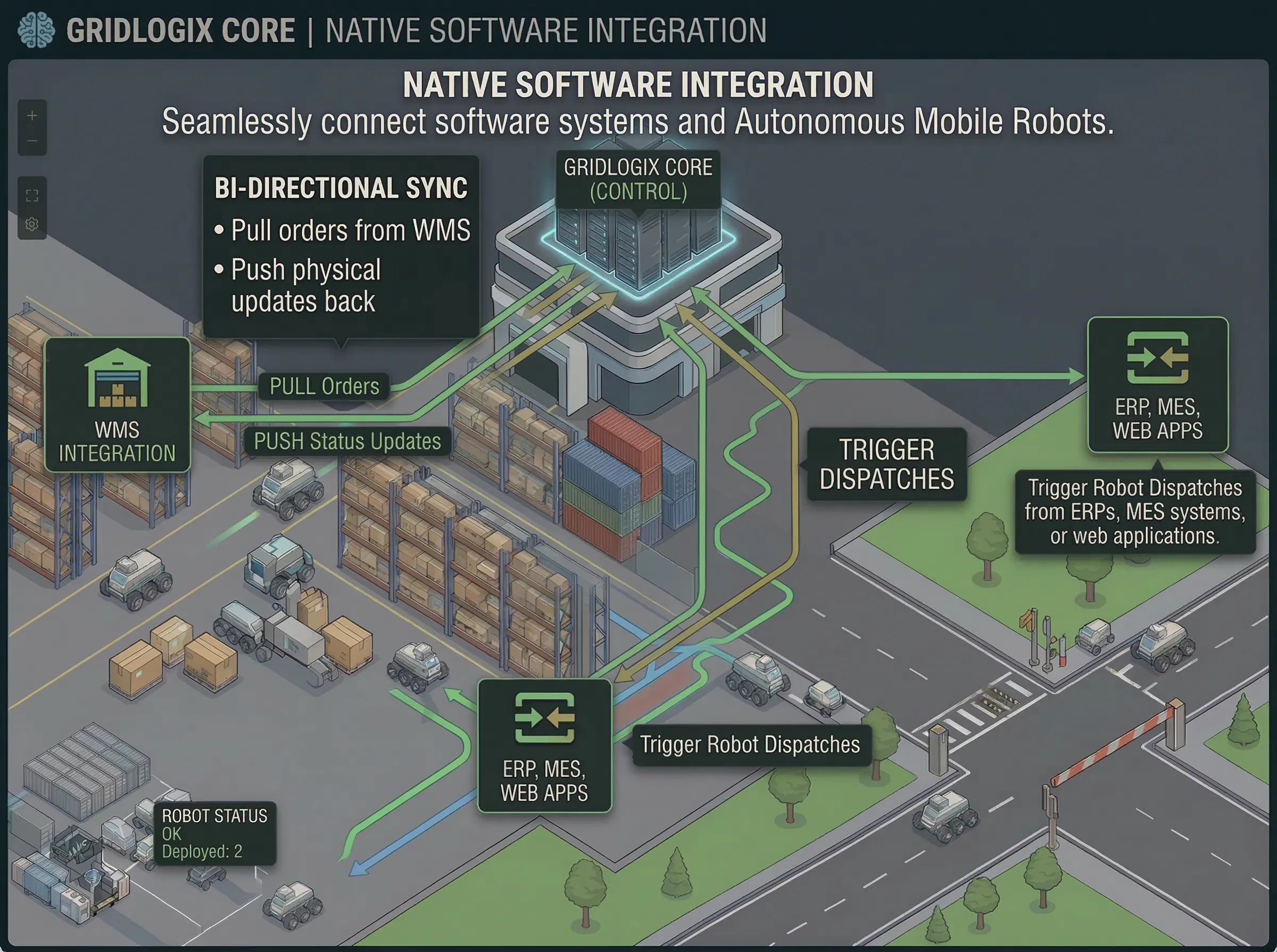
Your AMRs shouldn't operate in a silo. GridLogix Core bridges the gap between software orders and physical movement, integrating seamlessly with your existing tech stack.
GridLogix pulls transfer orders directly from your WMS (like SAP or Manhattan) and pushes real-time physical status updates back.
Open architecture allows developers to trigger robot dispatches from ERPs, MES systems, or even simple external web applications.
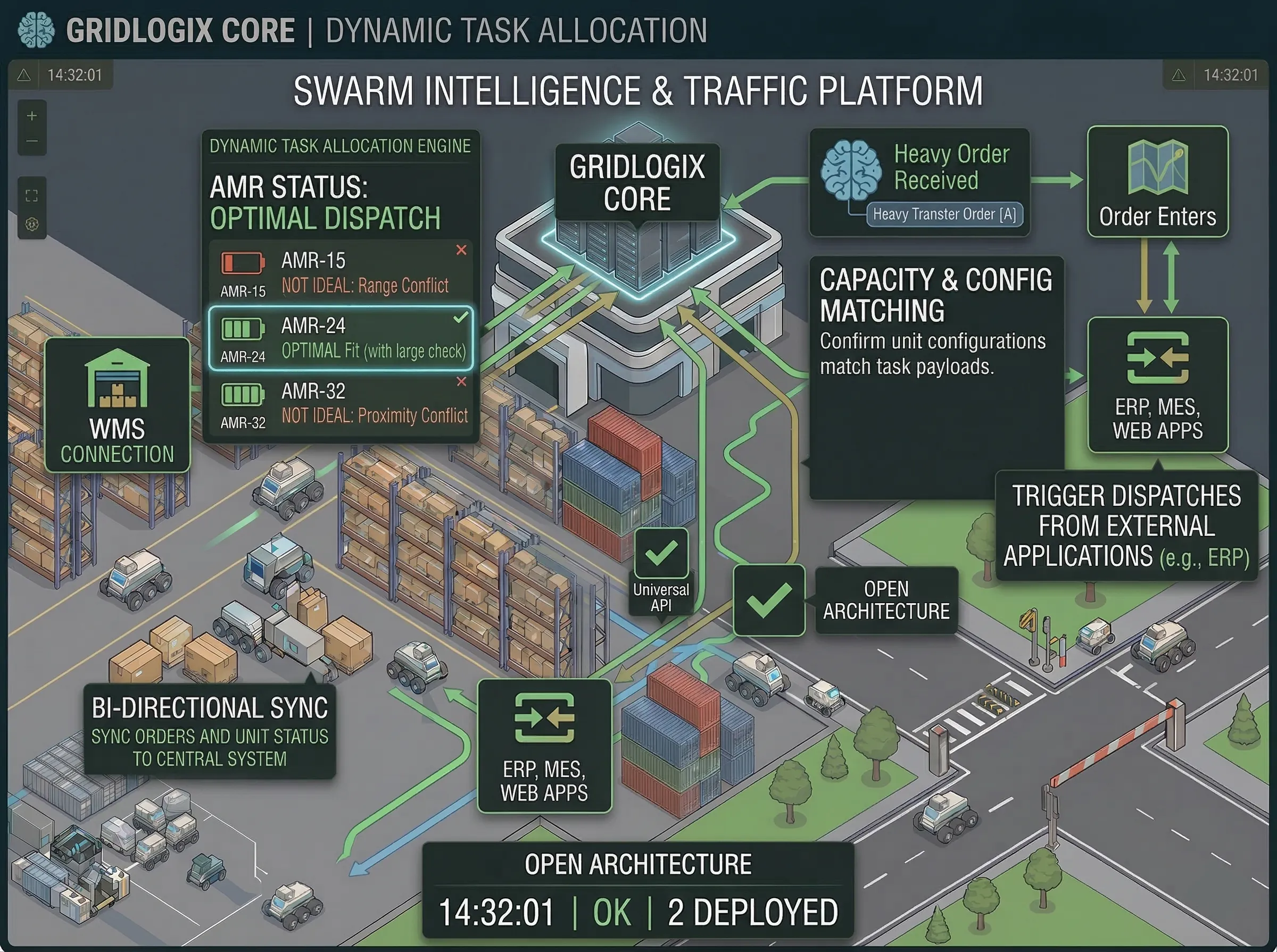
Don't let rigid scheduling slow you down. When a transfer order enters the system, GridLogix uses advanced heuristics to assign the job to the most logical robot in the fleet.
Assigns tasks based not only on proximity to the pickup location, but also on the robot's current charge state and the energy required for the route.
Intelligently distinguishes between different Carrier unit configurations, ensuring heavy-duty tasks are routed to units with the correct towing capacity.
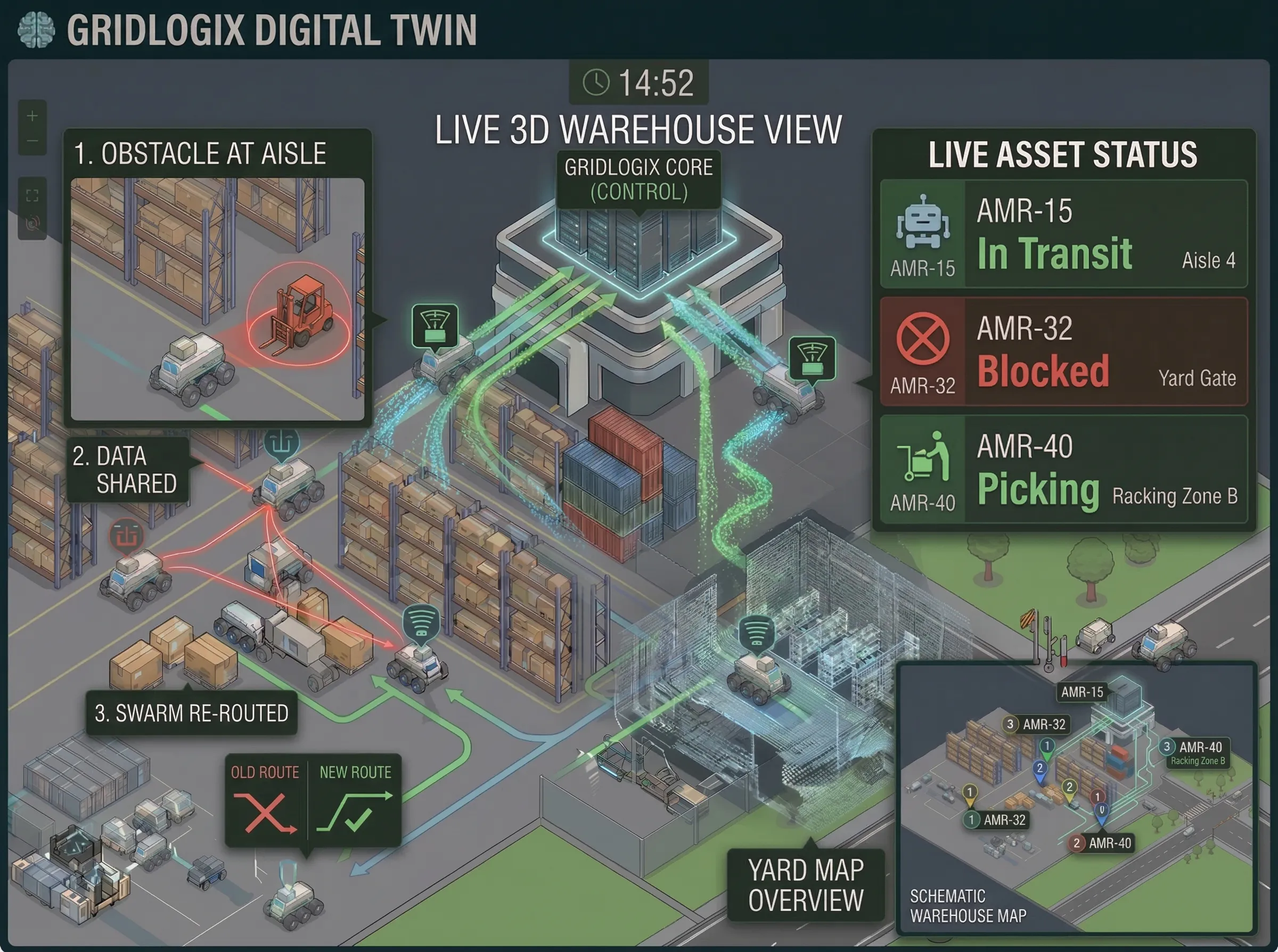
GridLogix doesn't just rely on static CAD files. As your Carrier fleet moves, they continuously map their environment, feeding LiDAR and spatial data back into a live 3D representation of your facility.
When one robot detects a temporary obstacle (like a parked forklift), that data is shared with the entire swarm to re-route subsequent traffic.
Visual dashboard allows logistics managers to see the exact real-time location and status of every robot and payload on the campus map.
Optimized software for high-throughput, heavy-material environments.
Sync production line speeds with just-in-time automated material delivery from the warehouse.
Coordinate fleets of AMRs to handle high-velocity cross-docking and pallet movement.
Manage heavy chassis transit between disjointed assembly buildings across large outdoor campuses.
Route autonomous tuggers through highly dynamic, obstacle-heavy tarmac and hanger environments.
Monitor battery degradation and schedule charging cycles efficiently in sub-zero operational zones.
Rapidly scale fleet size up or down based on seasonal peaks with zero software downtime.
Architecture specifications for IT and Supply Chain Integrators.
| Deployment Options | On-Premises Server, Private Cloud, or Gridbrains Managed Cloud |
|---|---|
| Fleet Capacity | Scalable up to 250 active robotic nodes per instance |
| WMS Integration Protocols | RESTful API, Webhooks, MQTT, TCP/IP Sockets |
| Mapping Technology | Continuous 3D SLAM (Simultaneous Localization and Mapping) |
| Traffic Management | Dynamic Re-routing, Deadlock Prevention, Intelligent Intersection Control |
| Data Security | End-to-end AES-256 Encryption, Role-Based Access Control (RBAC) |
| Analytics Dashboard | Live Heatmaps, OEE (Overall Equipment Effectiveness), Battery Analytics |
| Network Requirements | Private 5G or high-density Wi-Fi 6 coverage for optimal fleet sync |
Discover the other cognitive AI platforms powering the Gridbrains fleet.